Lately, students keep asking me: “Professor, do you use Lobster?”
For the record:
Uninstalled.
Is it any good?
It’s complicated.
Do you even remember how you ended up installing Lobster?
It wasn’t because you actually needed it. It was because at lunch one day, a colleague casually mentioned “Lobster.” Three people at the table chimed in, and you were the only one sitting there with a blank stare.
You know that feeling all too well—the panic of being left behind by the times.
You went back to your desk, immediately searched for it, registered, and downloaded it. You even dropped a message in your group chat: “Finally got on board.”
Over the next few days, your social media feed and short videos were flooded with “How to use Lobster to do X.” The more you scrolled, the more anxious you got—not because you genuinely needed it, but because it seemed like everyone else had mastered it except you.
Then you saw the headlines:
“Make 10K a month using Lobster.” “Landed three freelance gigs using AI.” “Those who can’t use AI are being eliminated.”
You bit the bullet and topped up your API key. “I’ll just put in 50 bucks to try it out. Not a big deal.”
And then what?
Installed it. Opened it. Didn’t know what to do with it. Closed it.
Opened it again the next day. Had it write your weekly report. Hmm, not bad. And then? Nothing.
A month goes by. The most complex task you’ve used it for—
was generating a caption for your social media post.
You find it ridiculous yourself. But the money has already been deducted. You’re reluctant to delete it, but you don’t use it if you keep it.
If this isn’t dead weight, what is?
Useless in practice—everything you do with it could have been done by free tools long ago. Hard to abandon—after all, you’ve spent money, invested time, and even bragged about it on social media.
But the most vicious part isn’t its lack of utility. It’s that it tricked you into thinking—you can’t survive without it.
The question is: Have you ever tried stepping away from it?
I have.
After installing Lobster, I stared at it for a long time—and realized I had no idea what to ask it to do.
Any task I could think of, I was already doing via CLI (Command Line Interface). In fact, grinding through it step-by-step in the terminal yields higher efficiency and consumes fewer tokens. Rather than tossing an entire task to Lobster with a single prompt and leaving it to luck, I prefer iterating round by round in the CLI, maintaining total control over every process and detail.
Lobster is like hiring an expensive outsourced contractor—the work gets done, but you have zero visibility into how. CLI is like sharpening your own knife—it’s slower, but you know exactly where every single cut is made.
So I uninstalled it. Without hesitation.
The way I use AI every day now is so unadorned you might not believe it.
Open the terminal. Type commands. Iterate back and forth with the AI.
No flashy interfaces. No bells and whistles.
It completes 80% of my work.
I use the remaining time to think.
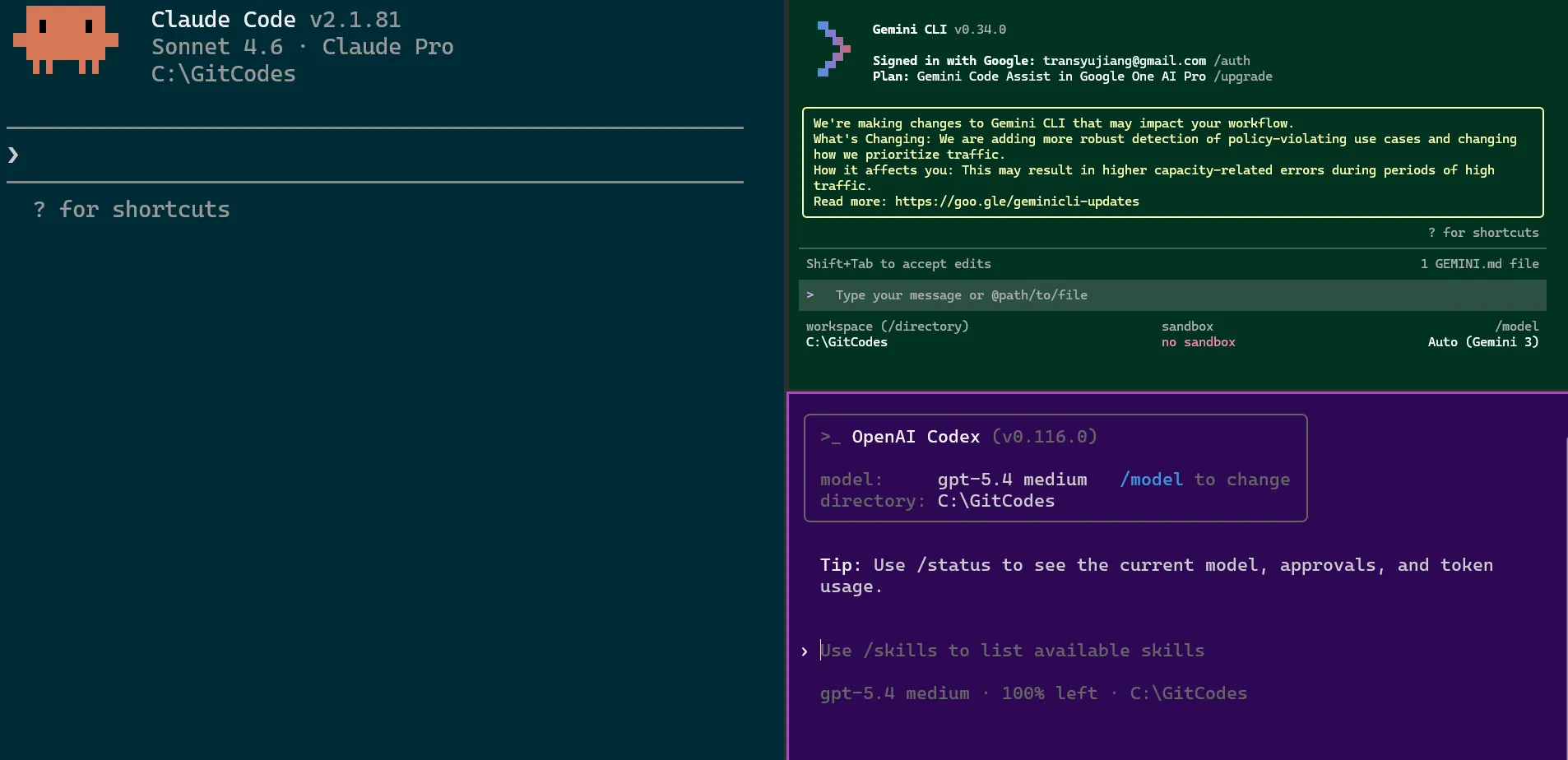 It’s that bare-bones. But it’s enough.
You are probably asking: What about the remaining 20%?
This 20% is the secret the entire AI industry desperately wants to hide from you.
They want you to believe: If the model just gets a little stronger, it will handle the rest. So you upgrade. It doesn’t work. You switch to another one. Still doesn’t work. You switch again. You keep paying. You keep grinding.
Have you ever considered—maybe the answer to that 20% isn’t in any model at all?
Sometimes you research a problem, revising version after version, and it only gets messier. Frustrated, you shut down your laptop and go out for a bowl of noodles.
While eating and staring blankly out the window, a thought suddenly pops into your head: You’ve been asking the AI to structure the answer, but you haven’t even figured out the question itself.
You go back and solve it in fifteen minutes.
That answer wasn’t in any model. It was in your own head the entire time—it was just blocked by the endlessly blinking cursor on your screen.
AI can help you run faster. But it cannot tell you which direction to run.
When it comes to direction, only one machine can do the job. Your own brain. The prerequisite is—you are still using it.
That’s why I set a hard rule for myself:
Once I hit my 5-hour daily quota, I walk away.
No switching accounts. No topping up. No grinding until midnight.
I go for a walk in the mountains. Gravel crunches underfoot, the wind blows through the valley carrying the scent of soil, and there is nothing in my ears but bird calls.
It is more real than the output of any model.

Halfway up the mountain, sweating, you’ll discover something bizarre: the problem that kept you stuck in front of a screen all afternoon—the answer is suddenly right there.
The AI didn’t give it to you. You figured it out yourself.
Or do nothing at all. Just go out for a walk. The warmth of the evening sun on your face—no screen can generate that.

Lobster isn’t powerful. But its marketing is.
It peddles anxiety—making you feel you’ll be obsolete if you don’t use it. It hijacks your wallet—how many times have you told yourself, “It’s only 50 bucks”? It devours your time—“Just one more prompt tweak and it’ll be perfect,” and two hours vanish.
But what it ultimately swallows isn’t your money, nor your time—it’s your habit of independent thought.
Thinking is like a muscle. Use it or lose it.
The more you rely on AI to think for you, the less you can think for yourself. The less you can think, the more indispensable AI feels. It’s a death spiral.
You think you are raising Lobster. In reality, Lobster is feeding on your anxiety, slowly hollowing out your wallet.
First, it drains your attention. Then, it drains your time. Finally, it drains your capacity for independent thought.
The day you realize you can’t even write a coherent formal email without it, you have entirely become its feed.
After 5 hours, take your hands off the keyboard.
That 20% answer isn’t in the next model. It never was.
A truly useful AI isn’t bought. It is forged by you, piece by piece.
There are no shortcuts. No “one-click configurations.” No influencer’s tutorial can walk this path for you.
You have to test it yourself. Test and revise. Revise and test again. Feed it your requirements, your context, and your mental models over and over—until it transforms from a generic toy into a second brain perfectly calibrated to you alone.
Patience and iteration. It’s not sexy, but it is the only real path.
I wrote down the pitfalls I encountered and the insights I gained along this path into a book: Patience and Iteration: Craft Your AI into a Second Mind for Science. It doesn’t teach you which model to use; it teaches you how to forge any model into your own weapon.

Lobster cannot do this. Only you can.
One last thing.
Have you noticed? After people download Lobster, they never say they are “using” it; they say they are “raising” it.
Raising Lobster.
Who is raising whom? Whose wallet is getting thinner?
Let that sink in.
Try something tonight: Close the most expensive AI app on your phone and don’t touch it for an entire day. Look at it tomorrow—has your life changed in any way?
If not, you have your answer.
[ A Thought ] — Decision-making can be practiced.